
What Is Co-Regulation? Understanding Your Child’s Behaviour When They’re Overwhelmed
There are moments in parenting that can leave even the most patient adult feeling overwhelmed.
The shouting. The hitting. The refusal. The running away. The shutting down.
When behaviour escalates, it’s not only your child who feels overwhelmed. Your body responds too. You might notice tension, frustration, helplessness or self-doubt.
That isn’t a sign you’re failing.
It’s a human response to a difficult situation.
What is your child’s behaviour trying to communicate?
One of the most common questions parents ask is:
“Why is my child behaving like this?”
As educational psychologists, we know that behaviour rarely happens in isolation.
Behaviour is often the outward expression of something happening beneath the surface.
A child may be experiencing anxiety, overwhelm, frustration, sensory differences, exhaustion, uncertainty or emotional distress. They may not yet have the words, confidence or developmental skills to communicate those experiences differently.
That doesn’t mean every behaviour is acceptable.
It means behaviour becomes much easier to understand when we ask what might be driving it.
What is co-regulation?
When children become overwhelmed, the parts of the brain responsible for reasoning, problem-solving and self-control are much harder to access.
This is where co-regulation becomes so important.
Co-regulation is the process of an adult helping a child regulate their emotions through their own calm, responsive presence.
Your voice.
Your facial expression.
Your pace.
Your ability to remain emotionally available.
These experiences help children feel safe enough to regain control of their emotions. Over time, repeated experiences of co-regulation provide the foundation for children to develop self-regulation.
It’s not about staying calm all the time (you’re human!)
Parents often worry that they should remain perfectly calm during every difficult moment.
That isn’t realistic.
Children don’t need perfect parents.
They needs adults who can reflect on difficult moments and demonstrate how to return to connection.
It’s these repeated experiences of safety, understanding and repair that support children’s emotional development over time.
When should you seek support?
If your child’s behaviour is becoming increasingly difficult to understand, affecting family life or leaving you feeling overwhelmed, you don’t have to work through it alone.
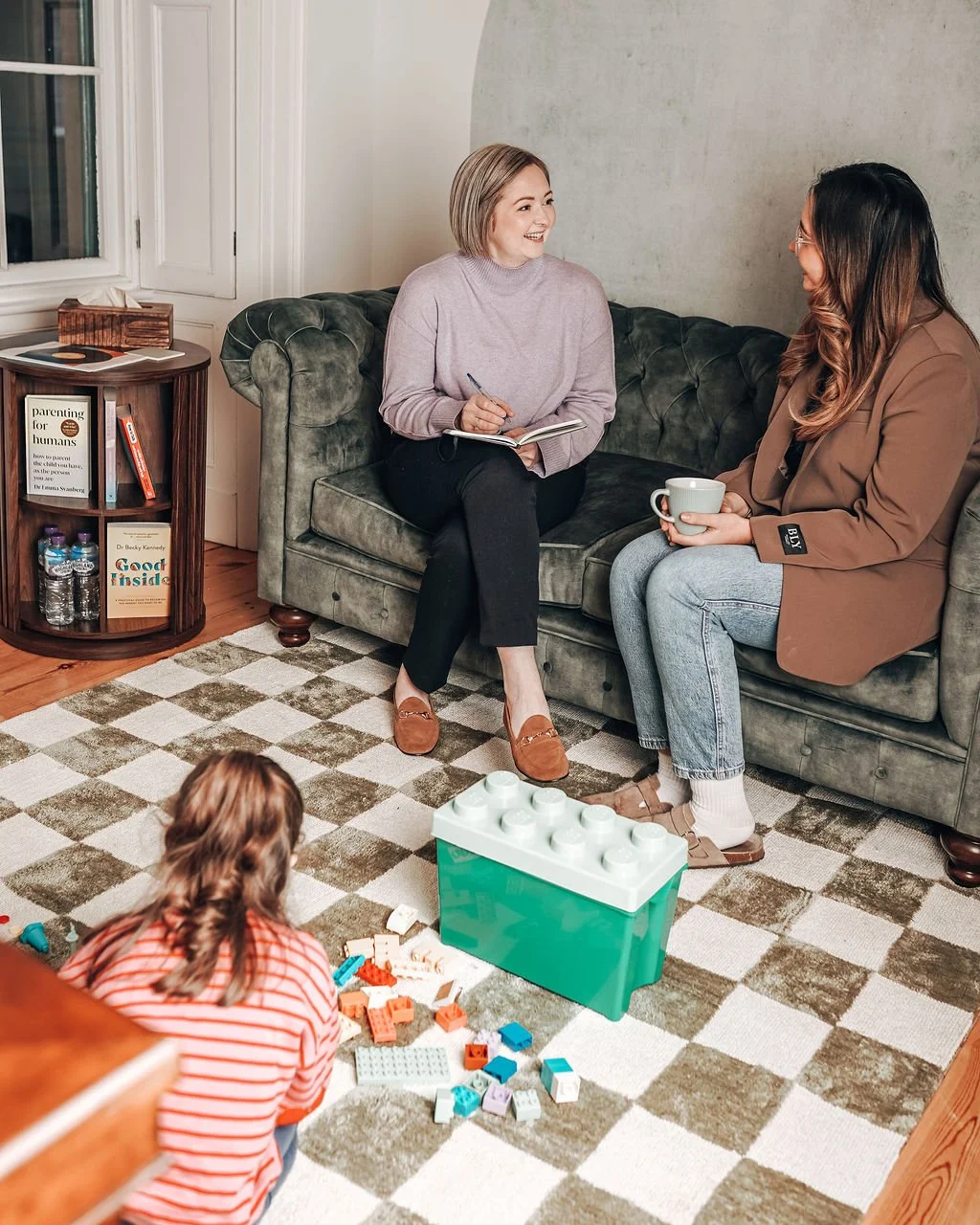
An educational psychology consultation provides space to explore what’s happening beneath the behaviour, develop a shared understanding of your child’s needs and consider practical, evidence-informed ways forward.
Sometimes the most helpful step isn’t finding a quick solution.
It’s making sense of what’s happening.
About the author
Dr Jemma Anderson is a Doctor in Educational and Child Psychology, HCPC Registered Educational Psychologist and Founder of Perceptive Educational Psychology Service, based in Dumfries.